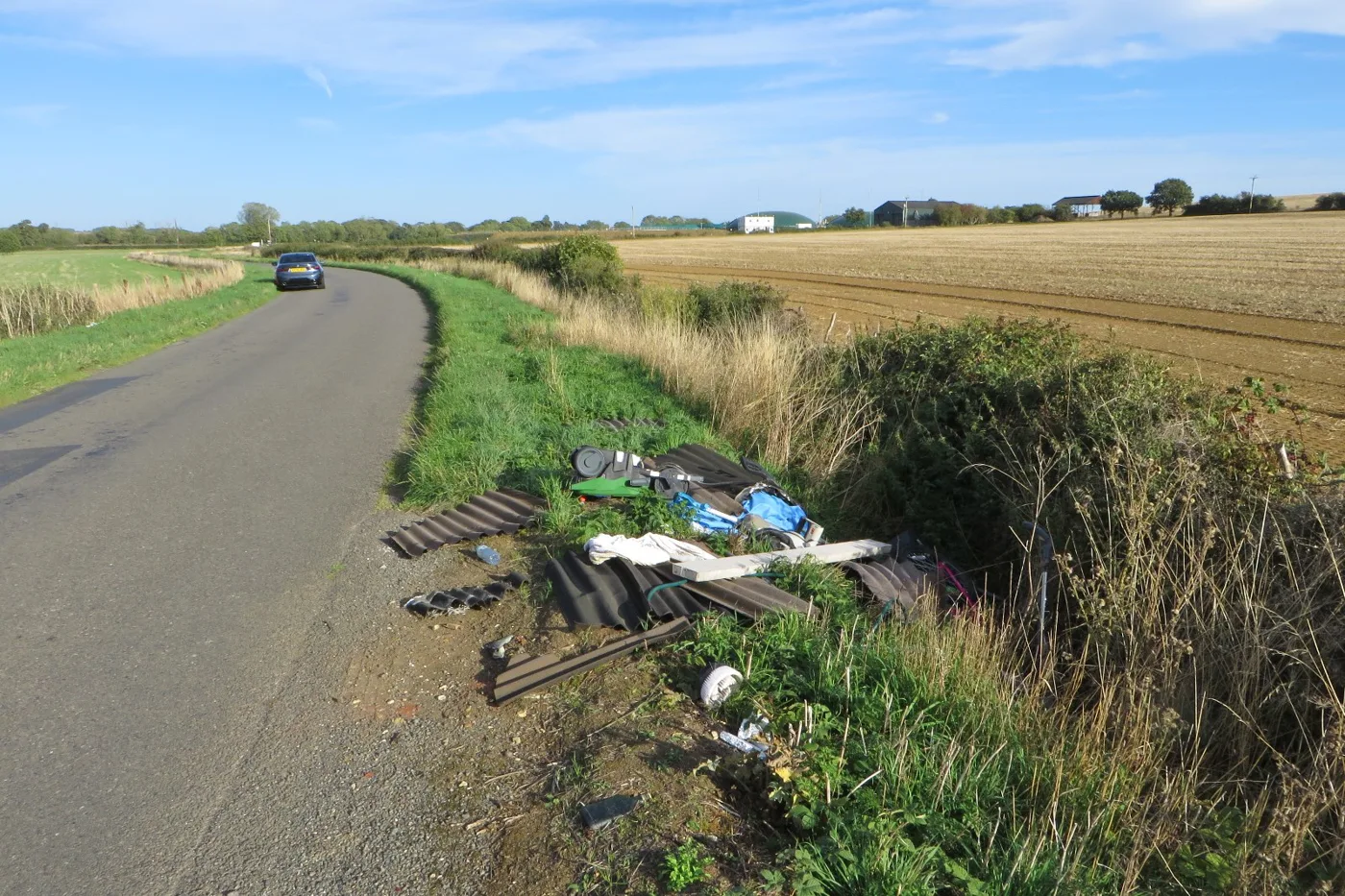

An internal audit found 628 of 1,548 environmental crime fines went unpaid in a year, and only four cases reached prosecution. Councillors discuss it on 19 November.
West Northamptonshire Council issued 1,548 fines for littering, fly-tipping, dog fouling and similar offences in a year, and 628 of them were never paid. Only four cases went on to prosecution.
The figures are in an internal audit of the council’s environmental crime enforcement, issued on 7 October. It gives the service “Limited” assurance, meaning auditors found significant gaps or weaknesses. (Internal audit report, Environmental Crime: Enforcement)
The report goes to the council’s Audit and Governance Committee at 6pm on Thursday 19 November, at One Angel Square. (Agenda, 19 November 2026)
The numbers
The fixed penalty notices covered December 2024 to December 2025.
- 1,548 issued in total
- 1,476 of them issued by Kingdom Local Authority Support, the contractor that handles on-street enforcement
- 72 issued directly by council officers
- 628 unpaid, which is 41 per cent
- 4 cases progressed to prosecution, 0.6 per cent of the unpaid notices
The fines range from £100 for dog fouling or smoking in a play area to between £50 and £1,000 for fly-tipping, littering and graffiti. Anyone who does not pay can be prosecuted for the original offence.
Why so few went to court
The audit says the council had been applying the wrong legal test. Earlier legal advice did not clearly separate the different tests. Officers had therefore waited until they were sure an offence could be proven “beyond all reasonable doubt” before referring a case to the council’s lawyers.
That is the standard for a conviction, not for starting a prosecution. The council has since had revised legal advice and changed its approach, the report says.
What else the auditors found
- the enforcement policy dates from March 2021 and has missed its own five-year review
- there are no written instructions for chasing unpaid fines; in five sampled cases, two reminders went out 24 and 28 days late and three were never sent
- nobody reconciles the fines systems with the council’s finance system, so there is no check that every payment is recorded
- the team relied on three separate old computer systems; a single replacement was due to go live in June 2026, about two years later than first planned
- a target for CCTV deployments producing usable evidence was 50 per cent, but results were 3, 0 and 14 per cent in the first three quarters of 2025/26
- a target to deal with every abandoned vehicle report within seven working days was met in 69, 71 and 58 per cent of cases over the same quarters
The auditors found no problems with how evidence was handled or how appeals and complaints were dealt with.
What the council says
The council’s Corporate Director for Law and Governance said in the report that significant progress had already been made. They pointed to stronger procedures, better management oversight, a formal training plan and the revised legal advice.
“I am confident that the service is moving in the right direction,” the director said.
The director also said the team is small for the range of work it does, and that it did not grow in proportion when the new unitary council took on a much bigger area.
What happens next
The auditors made eight recommendations, two rated essential and six important. Managers agreed all of them, and the training plan is already done. The deadlines include:
- a full review of the enforcement policy by 31 December 2026
- rules for chasing unpaid fines and escalating them by 31 December 2026
- reminder letters sent within one to two days of the 14-day payment deadline, by 26 February 2027
What it means for you
If you are given a fixed penalty notice, the audit makes clear the council intends to chase unpaid ones harder. Not paying can lead to prosecution for the original offence.
You can report fly-tipping to the council through its fly-tipping page.
Have your say