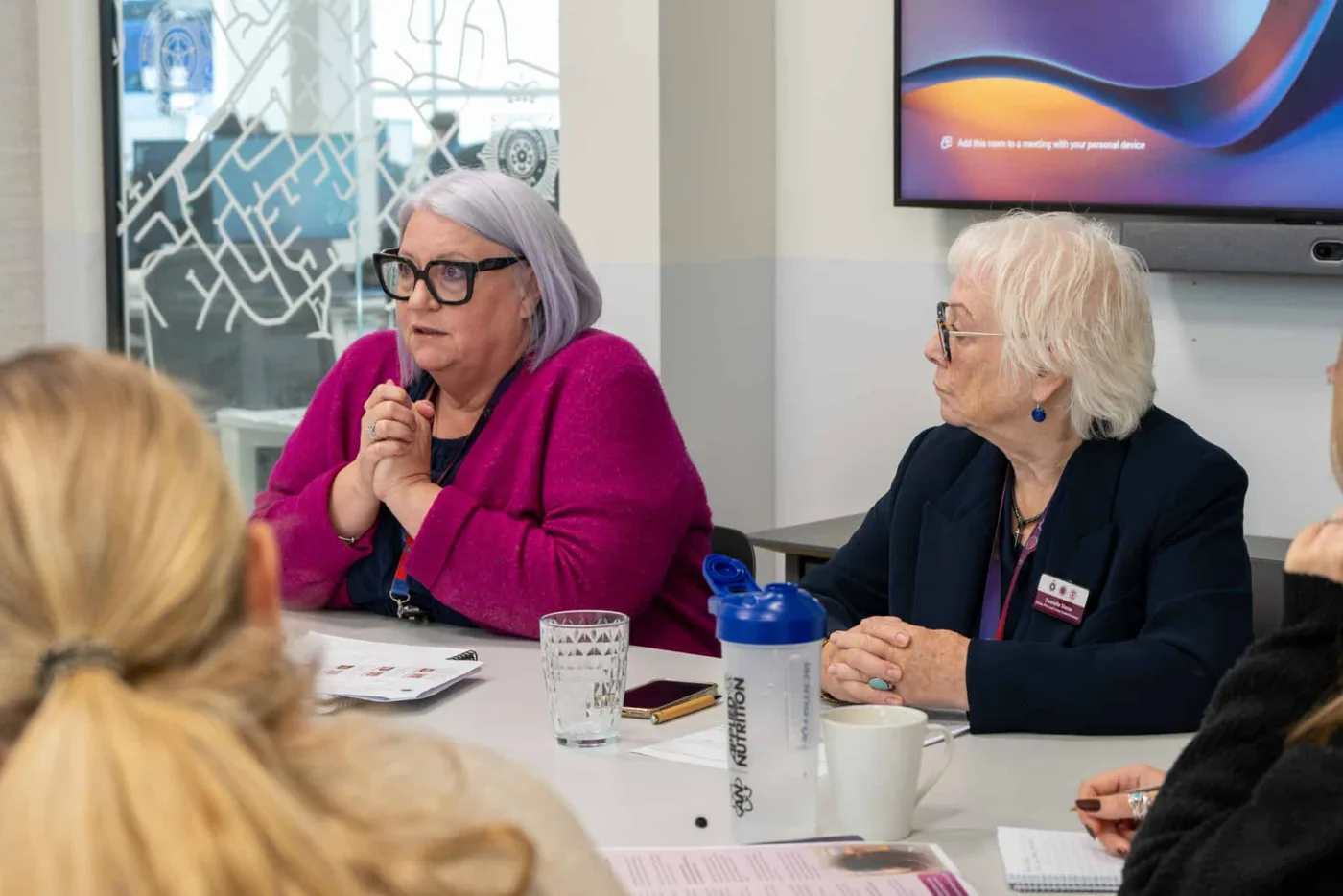

DfE officials heard from the Commissioner's Girls' Pathway, Operation Satin and prison teams. The work goes to MPs at Westminster on 16 November.
Officials from the Department for Education have visited the office of Northamptonshire’s Police, Fire and Crime Commissioner to see how its teams work with children who are at risk of exploitation, violence or being drawn into crime, the commissioner’s office said on Wednesday.
The next step is Westminster. Members of Commissioner Danielle Stone’s team will go to Portcullis House on 16 November to meet MPs, policing leaders and other Police and Crime Commissioners, where the office says it wants to show how Northamptonshire’s local schemes “could help shape policy and improve outcomes for young people nationally”.
Who the officials met
The visitors were welcomed by Danielle Stone and Jackie Jones, the office’s Director for Targeted Support and Designated Safeguarding, and then heard from the practitioners who do the work on the ground. The release says representatives from “across government and public services” took part; it does not say how many came or name any of the officials.
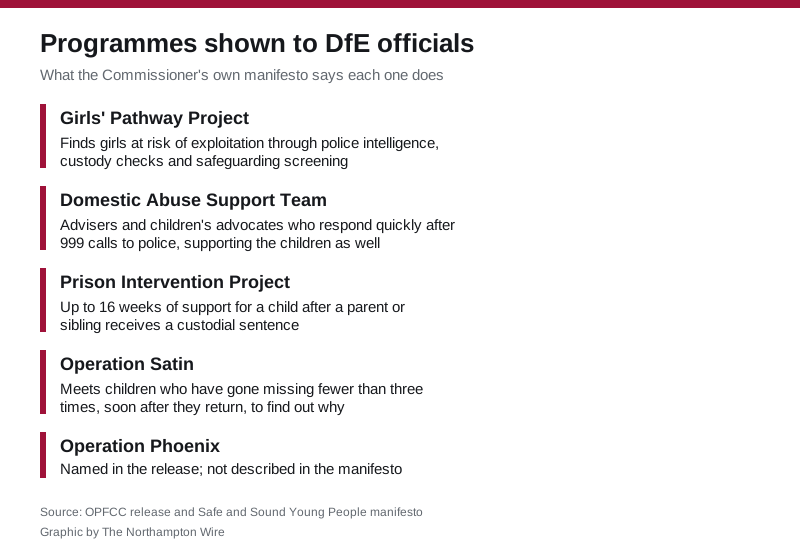
The programmes put in front of them included the Girls’ Pathway Project, the Domestic Abuse Support Team, the Prison Intervention Project, Operation Satin and Operation Phoenix.
What those programmes do
All of them sit within the commissioner’s Safe and Sound Young People programme, set out in the commissioner’s manifesto. The full document describes four of them in detail:
- Girls’ Pathway Project. Girls at risk of exploitation are identified “through police intelligence, custody checks and safeguarding screening”, and the team then works with schools, social care and safeguarding partners. The manifesto says it supports the county’s aim to halve violence against women and girls.
- Domestic Abuse Support Team. Independent Domestic Violence Advisers and Children’s Domestic Abuse Advocates “respond quickly following 999 calls to police”, working with the children as well as their parents and carers on safety planning, contact arrangements and access to legal help. The manifesto says it fills a gap for lower-risk cases.
- Prison Intervention Project. Set up with Northamptonshire Police for children whose parent or sibling has been given a custodial sentence. Practitioners step in once the Probation Service or the youth justice system identifies a child who is not getting support, and work with them for up to 16 weeks.
- Operation Satin. Practitioners based in the police Missing Persons Unit meet children who have gone missing fewer than three times, soon after they come home, to find out why they went. The manifesto calls it award-winning and says it has reduced repeat missing episodes.
Operation Phoenix is named in the release but is not described in the manifesto or on the commissioner’s manifesto page, so we cannot say here what it does.
What the commissioner and her director said
Jackie Jones said: “I am incredibly proud of our teams and the life-changing difference they make every day for children, young people and families across Northamptonshire.
“This work is about spotting vulnerability early, building trusted relationships and ensuring support reaches people when they need it most. Our practitioners help young people navigate some of the most difficult challenges they face, and through strong partnership working we are creating safer futures and better opportunities for them to thrive.”
Danielle Stone said the case for the approach was partly about police time. “By intervening sooner, we can prevent harm, reduce pressure on emergency services and allow policing to focus on those who pose the greatest risk to our communities,” she said. “It also helps to take demand away from frontline officers by addressing issues before they escalate into crises, meaning police time and resources can be directed where they are needed most.”
She added: “What makes this approach so powerful is the way organisations come together around children, young people and families. The people who know them best are working collectively, sharing expertise and making informed decisions to provide support at the earliest possible stage.
“If we get this right, the impact on young people’s lives can be transformational. Northamptonshire has already built something truly special, but there is still more we can achieve.”
The release does not give any figures for how many children the programmes have worked with or what has changed for them, and nor does the manifesto, beyond the Operation Satin claim above and a youth consultation it says reached more than 2,400 young people aged 11 to 18 (and up to 25 for those with additional needs).
What it means for you
Most of these services are reached through a referral, not by applying: the police, schools, the Probation Service or the youth justice system pass a child on. The manifesto lists other parts of the same programme that families may meet, including an Anti-Social Behaviour Early Intervention Team that works with 10 to 17 year olds for up to 12 weeks, and Voice, the commissioner’s service for victims and witnesses aged six and over, which the manifesto says is free, confidential and available “whether or not a crime has been reported”.
If you are worried a child is in immediate danger, call 999. The commissioner’s office says organisations that want a printed copy of the manifesto, or to work with its teams, can ask through its manifesto page.
The commissioner’s office also ran the Immediate Justice scheme behind this week’s Weedon Bec sandbags story.
Have your say