
The Ombudsman upheld 45 complaints against West Northamptonshire Council in 2025/26, 26 about SEND. It recommended £82,402 in redress to residents.
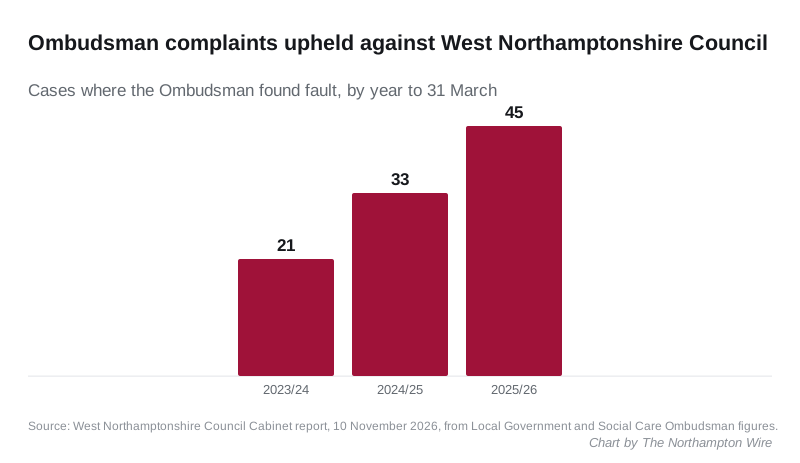
The Local Government and Social Care Ombudsman upheld 45 complaints against West Northamptonshire Council in 2025/26. That is up from 33 the year before and 21 the year before that.
More than half, 26 of the 45, were about special educational needs and education provision. The Ombudsman recommended a payment to the resident in 37 of the upheld cases, totalling £82,401.77.
The figures are in a report to the council’s Cabinet on 10 November. They cover the year from 1 April 2025 to 31 March 2026. The Ombudsman’s own annual review letter to the council is dated 20 May.
Almost double the rate of similar councils
The Ombudsman made 173 decisions about the council during the year. It carried out a detailed investigation in 50 of them and found fault in 45, an uphold rate of 90%. Similar authorities averaged 85%, the report says.
Adjusted for population, that is 10.2 upheld decisions per 100,000 residents. The average for councils of this type is 5.6.
| Year | Cases decided | Detailed investigations | Fault found |
|---|---|---|---|
| 2023/24 | 111 | 25 | 21 |
| 2024/25 | 130 | 37 | 33 |
| 2025/26 | 173 | 50 | 45 |
The council’s report puts the rise in context. The Ombudsman received 33% more complaints nationally in 2025/26, and SEND is the biggest area of concern across the country. The report also says the Ombudsman counts a complaint as upheld even when the council had already accepted fault before it got there.
Where the money went
Most of the £82,401.77 recommended in redress relates to education:
| Service | Redress recommended |
|---|---|
| Education | £69,560 |
| Adult social care | £11,041.77 |
| Communities and opportunities | £1,050 |
| Highways and transport | £400 |
| Children’s services | £250 |
| Benefits and tax | £100 |
The SEND complaints break down as 14 about assessments and reviews, 11 about provision and education, health and care plans, and one about alternative provision.
Other themes the report lists include:
- adult care: care planning, charging for care and aftercare under section 117 of the Mental Health Act
- housing: support for domestic abuse victims applying as homeless, private renting and disrepair
- council tax: wrong charges and slow adjustments
- highways: how penalties were administered
What the council did well
The council complied with every one of the Ombudsman’s recommendations, in all 40 cases where compliance was recorded. It completed 93% of the actions on time, against a 77% average for similar authorities.
It did worse at putting things right before a complaint reached the Ombudsman. In 4 of the 45 upheld cases, or 9%, the Ombudsman found the council had already offered a satisfactory remedy. Similar councils managed 13%, and the report says this is worse than the council’s own figure a year earlier.
The Cabinet noted the report on 10 November. It recommends a campaign during 2026/27 to promote complaint handling training, and says the council should consider setting aside small sums in local budgets to offer redress earlier.
What it means for you
A complaint about a council service goes through the council’s own two-stage complaints process first. At stage 1 the council aims to reply in writing within 10 working days. If you are unhappy with that answer, you have 20 working days to ask for a stage 2 review by an independent senior manager. If you are still unhappy after both, you can ask the Ombudsman to investigate. It looks at how a decision was made, not whether it was the right one.
The Ombudsman’s decisions about the council are published on its website, anonymised.
Have your say